
Space Thread
Previous 1 ... 18 19 20 21 22 23 24 ... 244 Next
Jabberwalker @ Tue Jul 30, 2013 9:21 am
Cool ... a Mobius loop ...
DrCaleb @ Thu Aug 01, 2013 9:47 am
Click on the article for a video of the actual expansion of the nebula over 20 years.
$1:
The Heartbeat of an Exploded Star
A thousand years ago—in July of 1054, to be somewhat more precise—the light from a cosmic catastrophe reached Earth. A massive star, probably 20 or more times the heft of the Sun, exploded. This titanic event was vast almost beyond human grasp: It released as much energy in a few weeks as the Sun will over its entire ten billion year lifetime.
The devastation was nearly total: Most of the star was torn apart, its octillion tons of matter blasted outward at a good fraction of the speed of light, while the very central core of the star collapsed to form a rapidly spinning white-hot neutron star. Now, ten centuries later, the expanding debris is 100 trillion kilometers across, glowing from both the influence of the neutron star’s fierce magnetic field, and the violent collision of the filaments of the gas itself, creating epic shock waves in the material.
We call this cloud the Crab Nebula, and you can see it in the picture above, taken by my friend Adam Block using the 0.81 meter Schulman Telescope in Arizona. The total exposure time on this image was a whopping 17.5 hours, using several different filters to produce those glorious colors.
A thousand years ago—in July of 1054, to be somewhat more precise—the light from a cosmic catastrophe reached Earth. A massive star, probably 20 or more times the heft of the Sun, exploded. This titanic event was vast almost beyond human grasp: It released as much energy in a few weeks as the Sun will over its entire ten billion year lifetime.
The devastation was nearly total: Most of the star was torn apart, its octillion tons of matter blasted outward at a good fraction of the speed of light, while the very central core of the star collapsed to form a rapidly spinning white-hot neutron star. Now, ten centuries later, the expanding debris is 100 trillion kilometers across, glowing from both the influence of the neutron star’s fierce magnetic field, and the violent collision of the filaments of the gas itself, creating epic shock waves in the material.
We call this cloud the Crab Nebula, and you can see it in the picture above, taken by my friend Adam Block using the 0.81 meter Schulman Telescope in Arizona. The total exposure time on this image was a whopping 17.5 hours, using several different filters to produce those glorious colors.

http://www.slate.com/blogs/bad_astronom ... _time.html
Jabberwalker @ Thu Aug 01, 2013 9:51 am
That's what our bodies are made of ... the shrapnel of supernovae.
DrCaleb @ Thu Aug 01, 2013 10:13 am
Jabberwalker Jabberwalker:
That's what our bodies are made of ... the shrapnel of supernovae.
I'm a star!
Jabberwalker @ Thu Aug 01, 2013 10:24 am
DrCaleb DrCaleb:
Jabberwalker Jabberwalker:
That's what our bodies are made of ... the shrapnel of supernovae.
I'm a star!
Some of us are brighter than others, I would also venture.
Tyler_1 @ Thu Aug 01, 2013 10:33 am
Jabberwalker Jabberwalker:
DrCaleb DrCaleb:
Jabberwalker Jabberwalker:
That's what our bodies are made of ... the shrapnel of supernovae.
I'm a star!
Some of us are brighter than others, I would also venture.
Some of us are dark stars.

Exploding ones look awesome!

Jabberwalker @ Thu Aug 01, 2013 10:37 am
I'm a star![/quote]
Some of us are brighter than others, I would also venture.[/quote]
Some of us are dark stars.
Exploding ones look awesome! [/quote]
With a last name like "Who" ... Do you live in a British police call box, by any chance?
DrCaleb @ Thu Aug 01, 2013 11:16 am
DonnaWho DonnaWho:
Some of us are dark stars.
Exploding ones look awesome!
Exploding ones look awesome!
Magnetars! The quakes that ocurr on the surface of one could cause a gravity wave felt across the universe! If one were in our solar system, it would erase all the magnetic stripes for all the cards in your wallet!
Jabberwalker @ Thu Aug 01, 2013 12:53 pm
DrCaleb DrCaleb:
DonnaWho DonnaWho:
Some of us are dark stars.
Exploding ones look awesome!
Exploding ones look awesome!
Magnetars! The quakes that ocurr on the surface of one could cause a gravity wave felt across the universe! If one were in our solar system, it would erase all the magnetic stripes for all the cards in your wallet!
.. and my eight track would be practically useless! How am I supposed to play my Kansas?
DrCaleb @ Tue Aug 06, 2013 2:31 pm
A video of leaving Earth's orbit, from MESSENGER:
Tyler_1 @ Tue Aug 06, 2013 2:42 pm
Big blue spinning marbles rule!
ShepherdsDog @ Wed Aug 14, 2013 5:35 pm
Any other sky watchers and star gazers getting excited about 2012 S1 Ison? Supposedly it'll be quite the event, and may be visible during the day. Some astronomers think it may even be C1680 V1 (Kirch's Comet) also known as the Great Comet of 1680. Others figure it's fresh from the Oort cloud I'm sure it'll attract its fair share of doomsday nutballs claiming it has some religious significance or that it is going to wipe us out. Mind you it is 3 km across so it is a big bitch
Hyack @ Wed Aug 14, 2013 7:25 pm
$1:
Word is out on the street, or at least in the astronomical community. Comet ISON may not be performing up to expectations.
The comet, hailed by the media as a possible “Once a century comet” that will shine “Brighter than the Full Moon” has made its appearance out from behind the Sun, and initial reports from ground-based amateurs has found its performance a bit lackluster.
The latest word on Comet C/2012 S1 ISON’s possible demise comes from a recent report online via Sky & Telescope by Arizona-based amateur astronomer Bruce Gary. Gary recovered ISON on August 12th, low in the dawn sky using an 11-inch reflecting telescope and estimated its current magnitude at just under +14, a full 2 magnitudes or six times fainter than predicted.
The comet, hailed by the media as a possible “Once a century comet” that will shine “Brighter than the Full Moon” has made its appearance out from behind the Sun, and initial reports from ground-based amateurs has found its performance a bit lackluster.
The latest word on Comet C/2012 S1 ISON’s possible demise comes from a recent report online via Sky & Telescope by Arizona-based amateur astronomer Bruce Gary. Gary recovered ISON on August 12th, low in the dawn sky using an 11-inch reflecting telescope and estimated its current magnitude at just under +14, a full 2 magnitudes or six times fainter than predicted.
http://o.canada.com/2013/08/14/comet-ison-hope-or-hype/
I'll just wait and see what happens over the next few months.
DrCaleb @ Thu Aug 15, 2013 11:49 am
$1:
Watch Erupting Star Live
New star, called Nova Del 2013, is now brightening fast in the constellation Delphinius. The erupting white dwarf should now be an easy target for binoculars and soon for naked-eyes too.
The stellar explosion in the constellation Delphinius is brightening so fast in the skies that it is on the verge of being visible with the naked-eye according to reports from Sky and Telescope website.
Kiochi Itagaki, an amateur astronomer in Japan, discovered the star a day ago (Aug.14) by using nothing more than a modest 7 inch scope with a digital camera. The brightening star, called a nova, has already passed magnitude 6 – making it an easy target for binoculars even from light polluted cities. If it continues brightening it may become visible in the next few days with the unaided eye from dark skies
...
How bright it will this one get is anyone’s guess but it’s pretty amazing considering nothing was visible in that spot in the sky before this week.
New star, called Nova Del 2013, is now brightening fast in the constellation Delphinius. The erupting white dwarf should now be an easy target for binoculars and soon for naked-eyes too.
The stellar explosion in the constellation Delphinius is brightening so fast in the skies that it is on the verge of being visible with the naked-eye according to reports from Sky and Telescope website.
Kiochi Itagaki, an amateur astronomer in Japan, discovered the star a day ago (Aug.14) by using nothing more than a modest 7 inch scope with a digital camera. The brightening star, called a nova, has already passed magnitude 6 – making it an easy target for binoculars even from light polluted cities. If it continues brightening it may become visible in the next few days with the unaided eye from dark skies
...
How bright it will this one get is anyone’s guess but it’s pretty amazing considering nothing was visible in that spot in the sky before this week.

http://newswatch.nationalgeographic.com ... star-live/
DrCaleb @ Thu Aug 15, 2013 12:25 pm
$1:
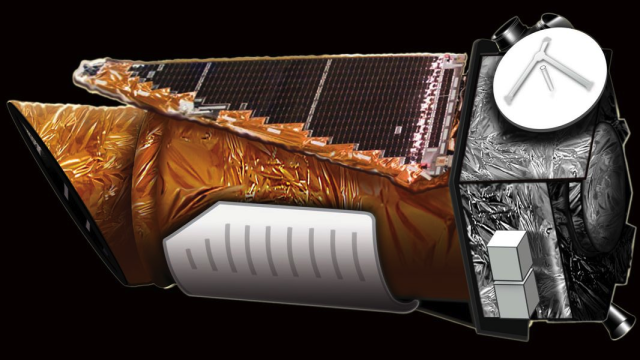
NASA gives up on resurrecting Kepler telescope
Planet hunter is a victim of failed aiming devices.
Earlier this year, news broke that the Kepler planet hunting telescope was in trouble. While in orbit, Kepler relies on precision hardware called reaction wheels to keep itself pointed in a single direction. It launched with four, and it needs three to aim properly. One of the reaction wheels failed in 2012, and a second showed signs of failure that led its controllers to put it into a fuel-saving mode that precluded further science. On August 8, engineers attempted to restart the two failed reaction wheels, but they were unable to get them to work. Kepler's mission is officially over.
But what a mission it was. According to NASA, the first half of the data it collected contained over 3,600 planetary candidates, 135 of which have been confirmed. Analysis is proceeding on the second half of the data now, but the first 3,600 were enough to change our perception of the Milky Way. We can now infer that it probably has at least as many planets as stars and that the most common types are small, rocky ones. Planets that are able to have liquid water on their surface are also likely to be common.
The downside of Kepler's end is that a longer mission would identify planets further from their host stars. To identify a candidate, Kepler needs to see it pass between Earth and the star the exoplanet orbits three times. The further out a planet is, the longer one orbit takes, so the longer it will need to do three passes. As such, the existing data is heavily biased toward planets that orbit very close to their host stars; this also means that most of the potentially habitable planets we've spotted are orbiting dwarf stars, which are dim enough that water can remain liquid close in.
In other words, we simply haven't looked long enough to detect planets in a habitable zone around energetic stars. We have a much better picture of the diversity of exoplanets, but it's far from a complete one.
Planet hunter is a victim of failed aiming devices.
Earlier this year, news broke that the Kepler planet hunting telescope was in trouble. While in orbit, Kepler relies on precision hardware called reaction wheels to keep itself pointed in a single direction. It launched with four, and it needs three to aim properly. One of the reaction wheels failed in 2012, and a second showed signs of failure that led its controllers to put it into a fuel-saving mode that precluded further science. On August 8, engineers attempted to restart the two failed reaction wheels, but they were unable to get them to work. Kepler's mission is officially over.
But what a mission it was. According to NASA, the first half of the data it collected contained over 3,600 planetary candidates, 135 of which have been confirmed. Analysis is proceeding on the second half of the data now, but the first 3,600 were enough to change our perception of the Milky Way. We can now infer that it probably has at least as many planets as stars and that the most common types are small, rocky ones. Planets that are able to have liquid water on their surface are also likely to be common.
The downside of Kepler's end is that a longer mission would identify planets further from their host stars. To identify a candidate, Kepler needs to see it pass between Earth and the star the exoplanet orbits three times. The further out a planet is, the longer one orbit takes, so the longer it will need to do three passes. As such, the existing data is heavily biased toward planets that orbit very close to their host stars; this also means that most of the potentially habitable planets we've spotted are orbiting dwarf stars, which are dim enough that water can remain liquid close in.
In other words, we simply haven't looked long enough to detect planets in a habitable zone around energetic stars. We have a much better picture of the diversity of exoplanets, but it's far from a complete one.
http://arstechnica.com/science/2013/08/ ... telescope/
Previous 1 ... 18 19 20 21 22 23 24 ... 244 Next